Overview
Star fruit, also known as carambola, is a tropical gem with a distinct five-pointed shape when sliced and a refreshing balance of sweetness and tanginess. It thrives in warm climates and is surprisingly easy to grow with the right conditions. Whether you are cultivating it for its aesthetic appeal, delicious fruit, or both, understanding its growth cycle will make all the difference.
Getting Started
Choosing the right variety is an important first step. Star fruit comes in both sweet and tart cultivars, with some varieties better suited for raw eating while others work well for juicing and cooking. If you prefer a mild sweetness, varieties like Arkin or Sri Kembangan are excellent choices.
Since star fruit trees thrive in warm climates, they grow best in USDA zones nine through eleven. If you live in a cooler region, planting in a container allows you to bring the tree indoors during colder months.
Planting location is another key factor. Star fruit requires full sun exposure, meaning at least six to eight hours of direct sunlight each day. Without enough light, fruit production decreases, and the tree may struggle to grow properly.
When selecting soil, star fruit trees prefer well-draining, slightly acidic soil with a pH between 5.5 and 6.5. If your soil is compacted or poorly drained, amending it with organic matter or sandy soil helps create ideal conditions for root development.
Planting Basics
Star fruit trees can be grown from seeds, but if you want to enjoy fruit sooner, opt for grafted or air-layered saplings. Seed-grown trees can take five to seven years to mature, whereas grafted trees typically produce fruit in two to three years.
When planting directly in the ground, dig a hole twice the width and depth of the root ball. Ensure good drainage by mixing sand or organic compost into the soil to improve texture. Space trees at least twelve to twenty feet apart since they tend to spread as they mature.
Water young trees regularly to help them establish strong roots, but avoid overwatering, as excess moisture can lead to fungal diseases. Once established, star fruit trees tolerate short dry periods, making them relatively low-maintenance.
Mulching is highly beneficial for retaining soil moisture while preventing weeds from competing with the tree’s root system. Use straw, pine bark, or wood chips around the base to keep moisture levels steady while allowing air to circulate.
Pruning
Although star fruit trees do not require heavy pruning, strategic trimming encourages stronger growth and improved fruit production.
For young trees, light pruning helps establish a well-balanced canopy by removing weak or excess branches. This allows the tree to focus its energy on developing healthier, more abundant fruit.
Over time, shaping the tree improves airflow, reducing the risk of fungal infections while ensuring that sunlight reaches all parts of the plant.
If the canopy becomes too dense, cutting back crossing branches can open up space, making maintenance and harvesting easier.
From Flower to Fruit
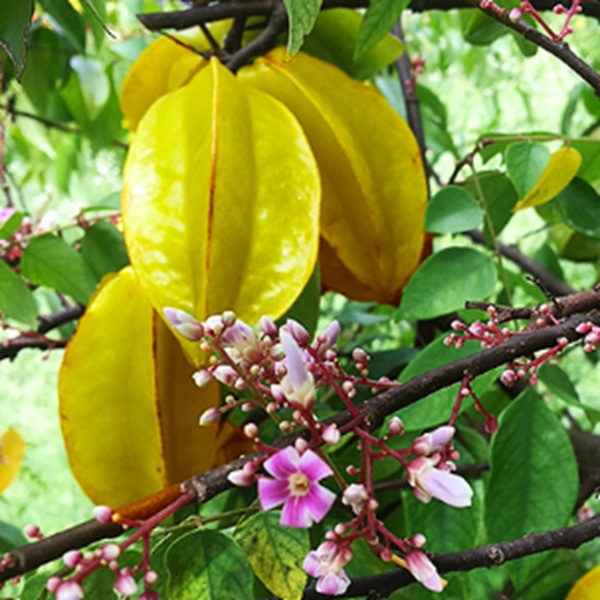
Star fruit trees produce clusters of small, pinkish-purple flowers during warm months, which later transform into fruit. The tree is self-pollinating, meaning it can bear fruit on its own, but having bees around will significantly boost yields.
Once flowers transition into young fruit, ensuring consistent moisture and adequate sunlight helps produce larger, juicier star fruit.
One interesting aspect of fruit development is how sunlight exposure affects flavor. Star fruit growing in direct sunlight tends to be sweeter, while shaded fruit can have a more tart taste.
During the final stages of ripening, the fruit changes from green to yellow, signaling it is ready for harvest. Unlike some fruits, star fruit can continue ripening after being picked, making harvest timing flexible.
Harvesting
Knowing when to pick star fruit is essential for achieving the best flavor. The key indicators of ripeness include a mostly yellow color with a slight hint of green near the edges, a firm but slightly waxy texture, and easy detachment from the branch with a gentle twist.
Use sharp pruning shears to harvest fruit cleanly, as pulling by hand can damage nearby growth. If left on the tree, ripe star fruit may fall naturally, but picking them at peak ripeness ensures maximum flavor and texture.
Fresh star fruit can be eaten raw, juiced, or used in various dishes for a tropical twist. To extend freshness, store harvested fruit in a cool place or refrigerate. You can create unique fruit punches by juicing star fruit with other fruits, no water added.
Final Thoughts – A Juicy Favorite
Growing star fruit requires patience, but seeing bright yellow fruits hanging from the branches makes it well worth the effort. Whether you enjoy their crisp, refreshing taste or simply appreciate how the tree adds a tropical touch to your garden, cultivating star fruit is a highly rewarding experience.